Stop estimating.
Start approving.
Inoscope turns job context into approved construction pricing.
Photos, plans, invoices, voice notes, SORs and tender packs become scoped, priced work records your team can review, adjust and approve.
Built for builders, repair operators, branch networks, tender teams and pricing reviewers.
Growth exposes pricing drift.
The problem is not one missing estimate. It is the repeated drift between job context, scope, rates, approvals, variations and the final cost of delivery.
Inoscope gives teams one connected pricing record so the price can be reviewed before it becomes margin leakage.
Context waits
Photos, notes, plans and reports arrive separately, so senior people rebuild the story before pricing can move.
Rates drift
Branches, repair teams and tender reviewers work from different assumptions, margins and rate habits.
Proof is scattered
Evidence, SOR logic, assumptions, reviewer notes, variations and invoices are hard to defend when separated.
Actuals arrive late
Invoices and completed-job costs expose drift only after margin has already moved.
A new category for pricing work.
The work still needs expert judgment. Inoscope turns manual estimate build-up into review and approval.
Inoscope does not replace the decision. It creates the pricing record around it: context in, scoped and priced assessment out, human approval at the boundary.
From job context to approved pricing.
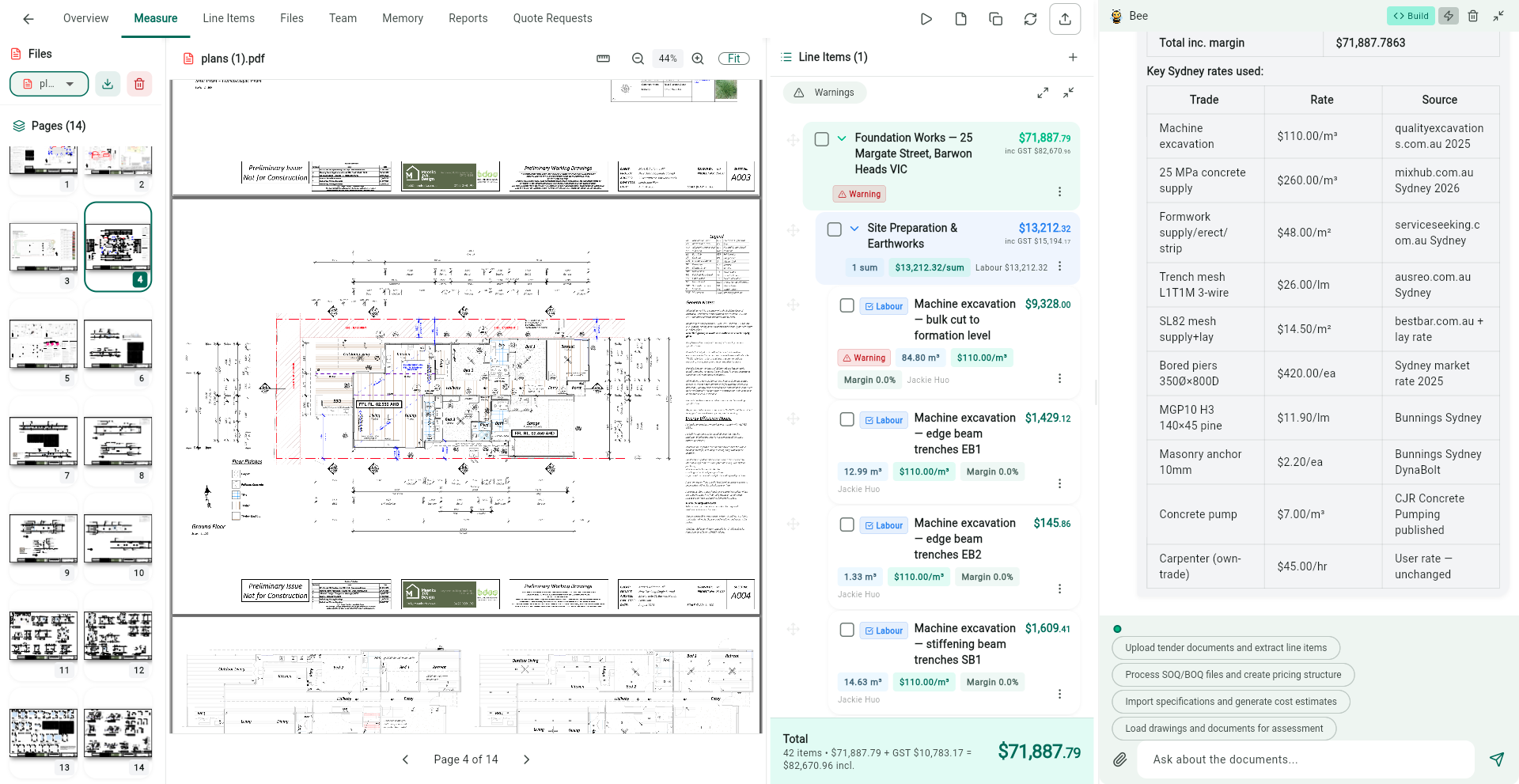
Inoscope turns messy job context into scoped, priced, approval-ready work records. It keeps evidence, scope, rates, assumptions, approvals, variations, invoices and rate feedback connected.
Capture the job
Bring photos, notes, reports and files into one assessment.
Build the priced scope
Prepare line items, quantities, assumptions and rates.
Review and approve
Keep experts in control of exceptions and final approval.
Track change
Connect variations back to the original approved record.
Feed back actuals
Use invoices and decisions as evidence for the next job.

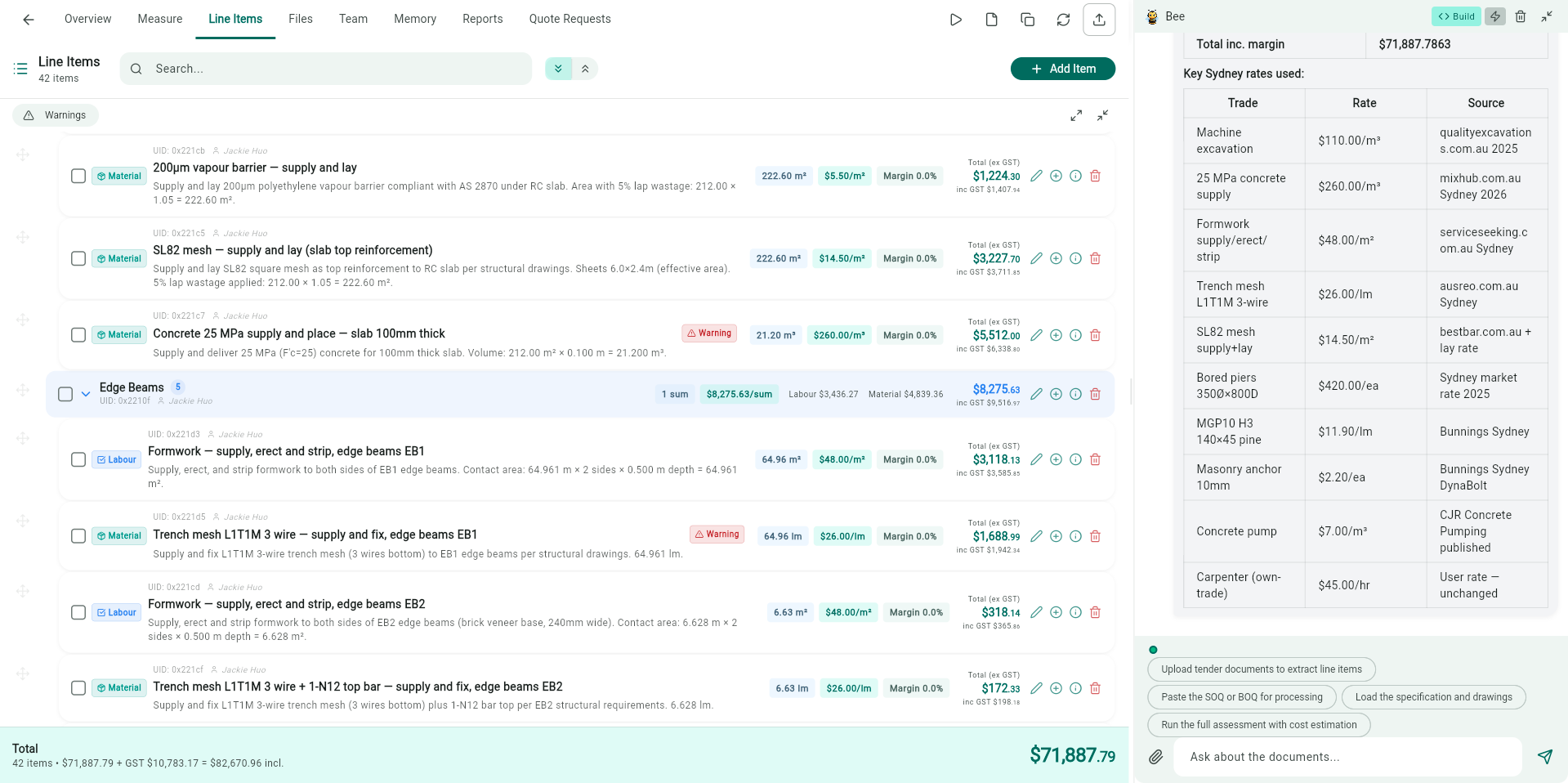
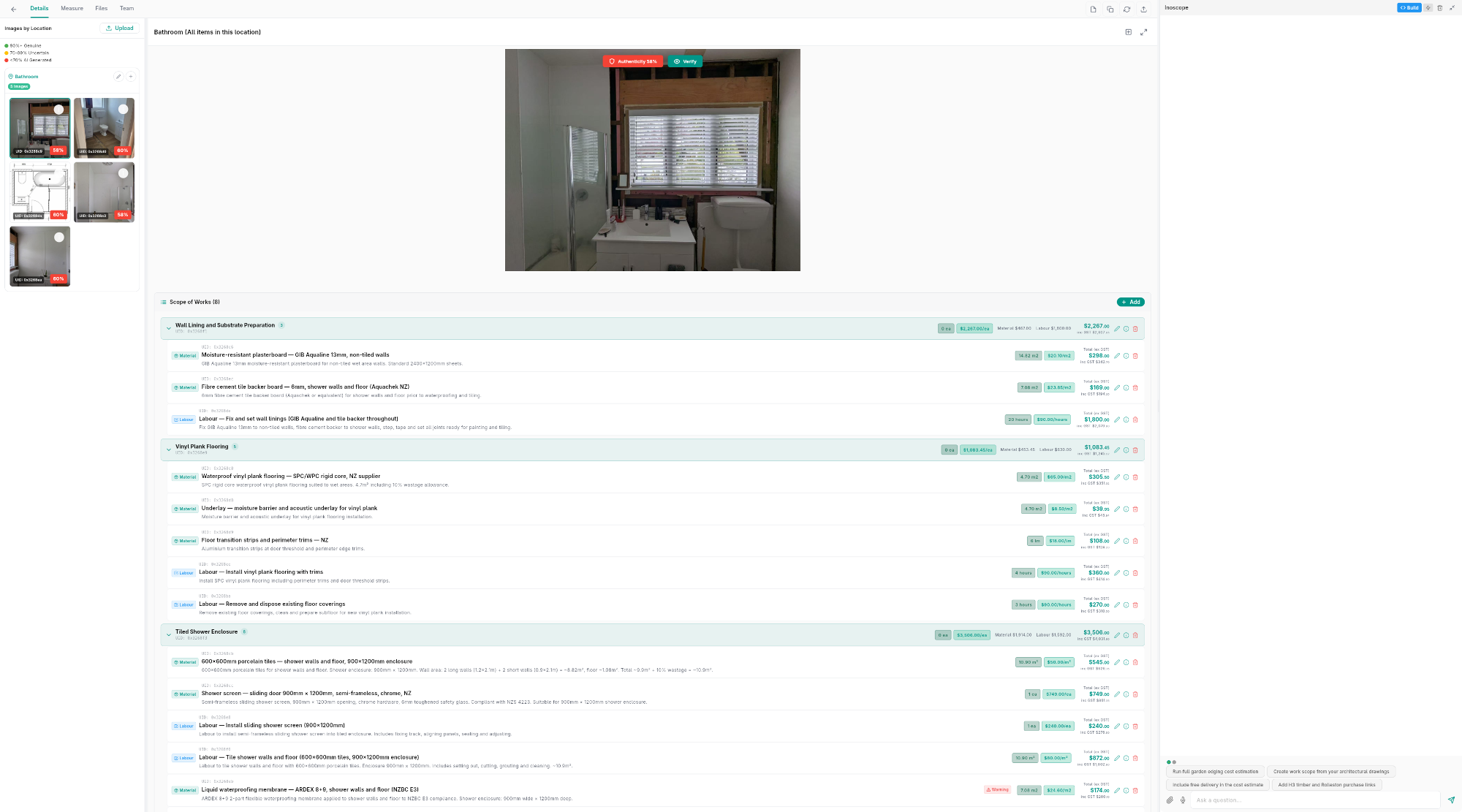
The screenshot represents the connected pricing record. The workflow shows what stays attached as the job moves from context to approved pricing and rate feedback.
Stop quote leakage before it becomes margin leakage.
A quote is not just a number. It is a chain of assumptions: scope, method, quantity, rate, approval, variation and final invoice.
When those pieces are disconnected, leakage becomes invisible.
Scope leakage
Work is missed, duplicated, poorly described, or disconnected from the evidence.
Rate leakage
The wrong labour rate, supplier price, SOR, contractor rate or margin rule is used.
Approval leakage
A price is accepted without the reviewer seeing the evidence, assumptions or exceptions.
Variation leakage
Changes happen on site but are not connected back to the original scope and approval.
Invoice leakage
Final costs differ from the quote, but the business does not capture why.
Learning leakage
Completed-job data exists, but it does not improve the next quote.
Most estimating tools stop at the quote. Inoscope follows the price through approval, variation, invoice and rate review — so leakage becomes visible.
Every job input becomes one pricing record.
Turn messy job information into approved pricing. Site walks, meeting notes, tender packs, plan sets, invoices and specifications stay connected to the scoped and priced assessment your team reviews.
Builders & renovation teams
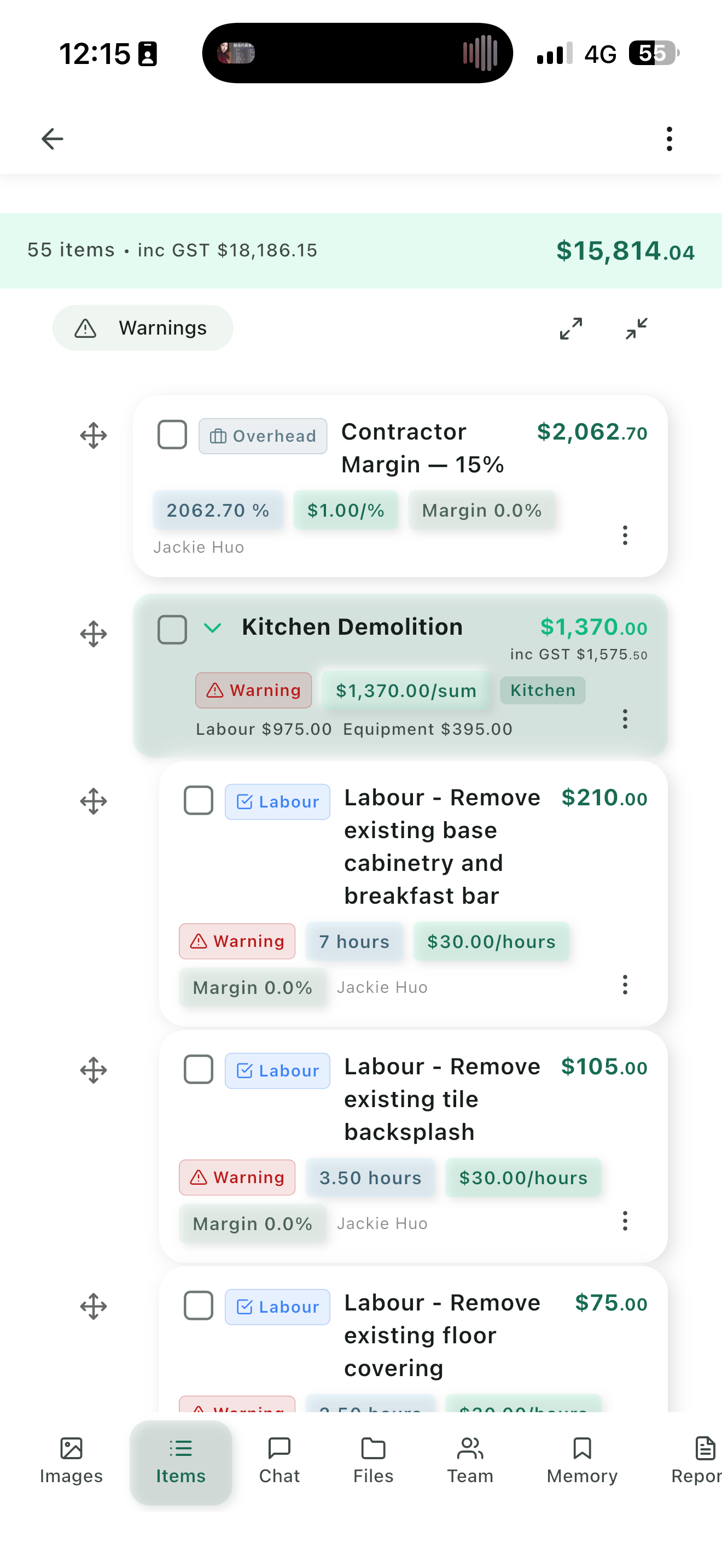
For builders managing repairs, renovations, maintenance and variations. Price more jobs without adding more estimators by turning photos, site notes, plans and invoices into scoped, priced work records ready for review.
- Build line items from job context
- Apply your rates, margins and assumptions
- Keep evidence and pricing logic together

Your rate book learns from real jobs.
Inoscope builds a living rate system from the invoices, quotes and decisions your business already makes. Supplier bills, contractor invoices, approved quotes, variations and completed-project costs become pricing evidence for future assessments.
No cross-customer rate sharing. Your rates, invoices, margins and approved pricing history stay account-specific.

Your rates calibrate from real work.
Supplier prices, contractor invoices, customer quotes, contract invoices, approved prices, and completed-project costs all become pricing evidence. Inoscope turns them into calibrated logic your team can review.
Fewer repeated rate tables. Less blind back-costing. Pricing evidence your team can review.
Calibrates to your real rates
Inoscope reads supplier bills, contractor invoices, past quotes, and contract pricing to understand how the business actually prices work.
Uses approved pricing history
It keeps signals from each assessment, each reviewer decision, and the company rate book so teams can reuse approved pricing logic.
Records the why
Every rate, assumption, edit, and explanation is kept for review, leakage checks, and future improvement.
Built to create pricing infrastructure, not another estimator screen.
Six capabilities work together so pricing becomes repeatable, reviewable and company-owned: plan reading, measurement, approved pricing history, evidence trail, rate calibration and approval workflow.
Plan reading and tasking
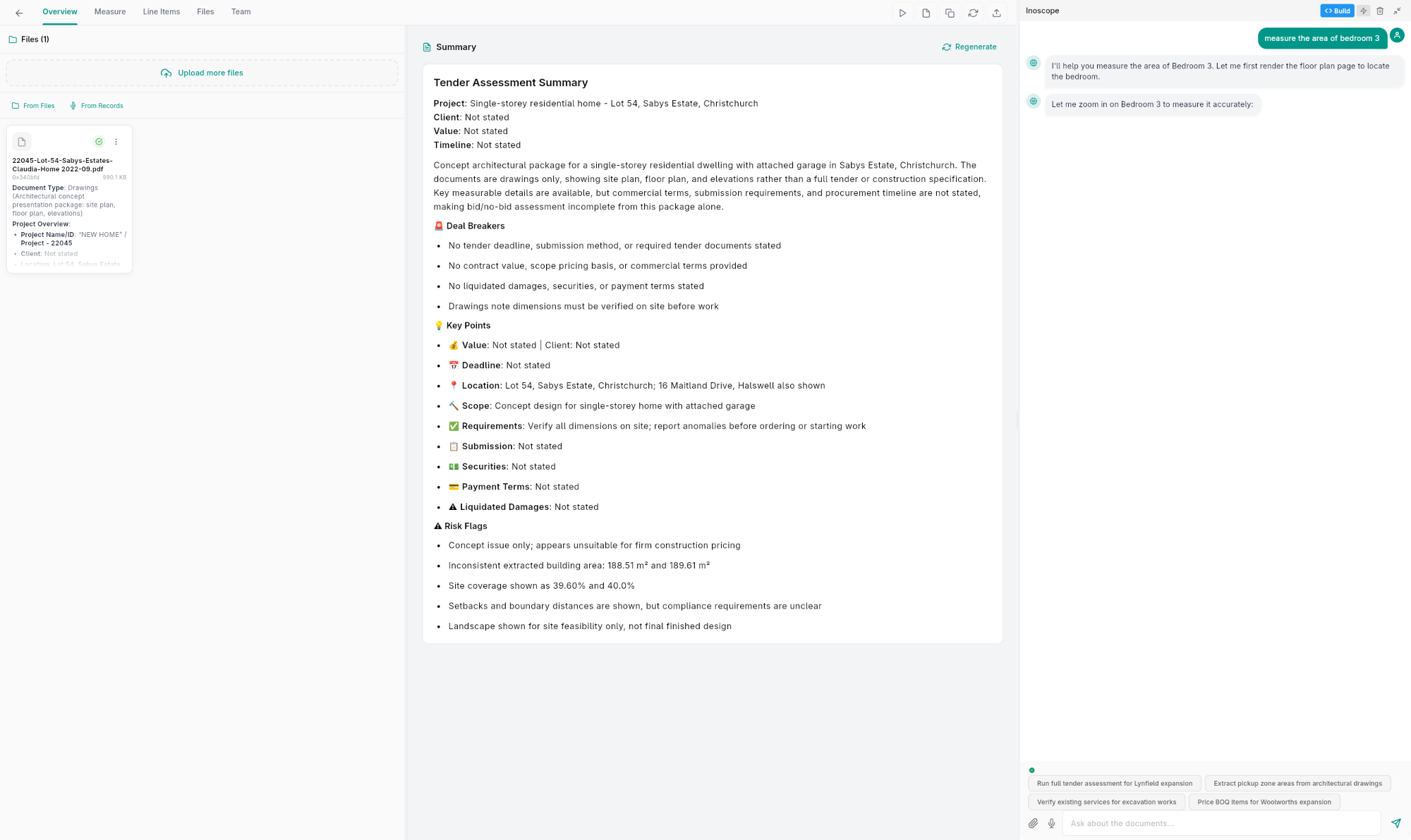
Inoscope reads plans, estimates quantities, interprets requirements, writes line items and prepares pricing for expert approval.
Measurement and quantity
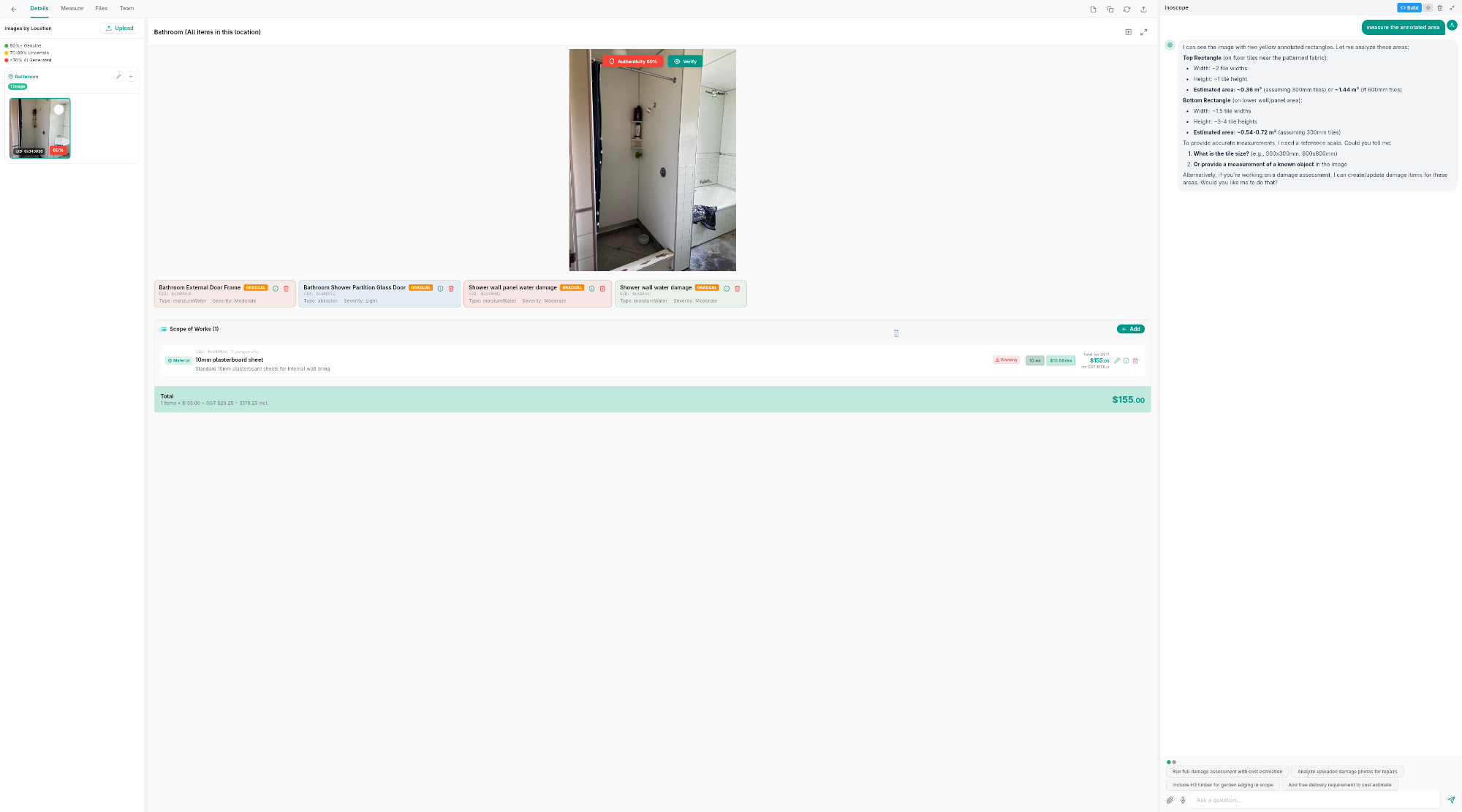
Plans, photos, and files become measured quantities with calculation notes — so reviewers can check the logic, not rebuild it.
Approved pricing history
Assessment history, reviewer edits, approved decisions, and company rates become reusable pricing logic for future assessments.
Evidence trail for every price
Every assessment keeps photos, files, rates, measurements, assumptions, explanations and approvals together.
Approval workflow
Pricing logic is shared company-wide while experienced people stay in control of exceptions, adjustments and final decisions.
More pricing capacity
Tender packs, site visits, variations and repair assessments can run in parallel. Your team reviews and approves while the pricing queue keeps moving.
Offload the workload. Keep the expertise.
Inoscope measures, builds line items, calculates prices, and creates the first pricing record. Experienced people review and approve, while admins and operations keep the work moving. Let admins and project managers move pricing forward without turning them into estimators.
One pricing record
Site visits, photos, voice notes, tender packs, engineering drawings, specs, and client conversations all feed the same pricing record.
Parallel assessments
Inoscope scopes and prices multiple assessments at once. Your team moves from building every line manually to approving the pricing decision.
Operations can drive the work
Capture, scoping, and pricing move into an approval workflow. Experts spend more time on judgment and less time on data entry.
Collaboration, unlocked
Adjusters, estimators, contractors, and reviewers share one source of truth. Approval flows replace email threads and spreadsheets.
12 Harbour Rd — multi-trade
Reading plans and specs
Kitchen fire — 34 photos
Building defensible line items
Oak St — scope change
Updating pricing logic
While your team reviews, parallel assessment processing keeps the queue moving.
Capture site context while it is fresh.
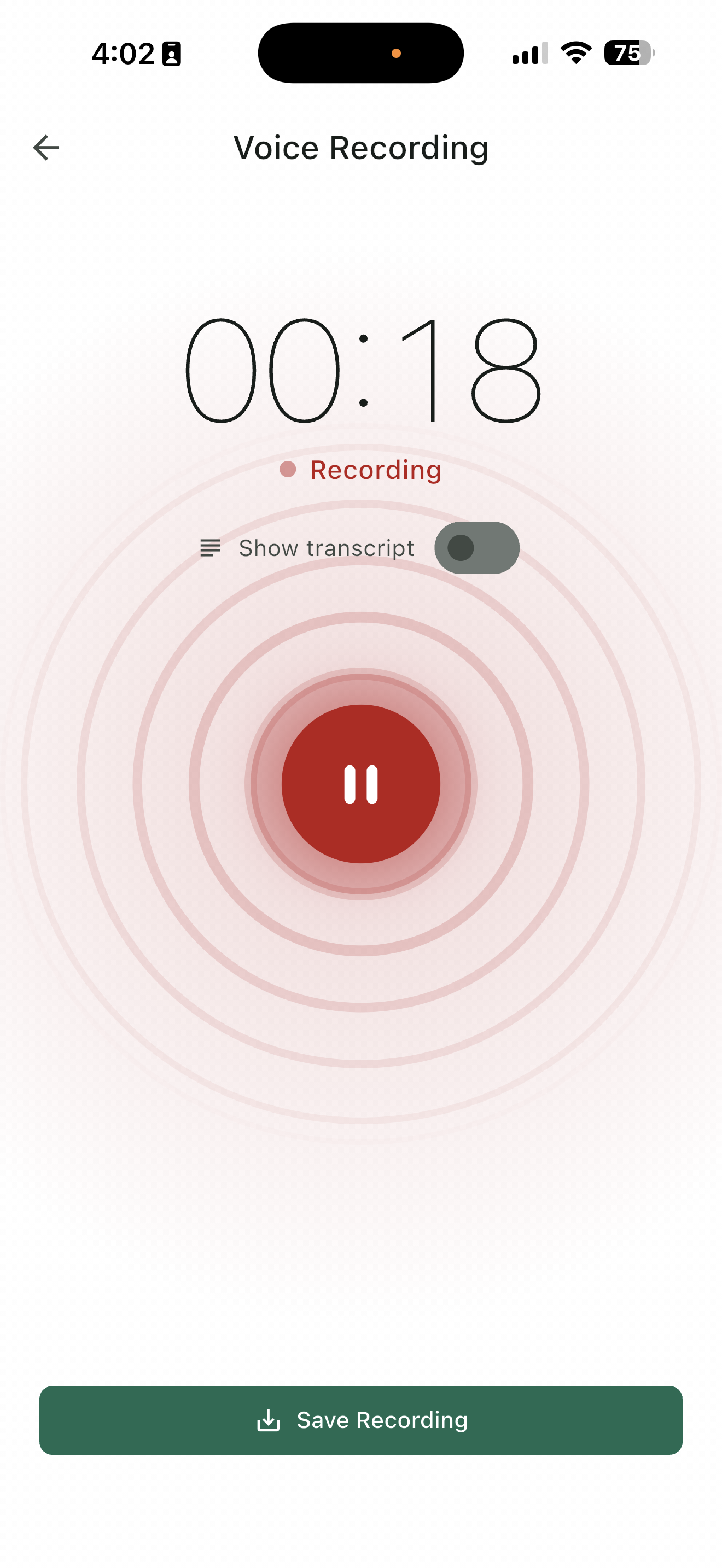
Site information disappears between the phone, the ute, the office and the spreadsheet. Inoscope lets your team capture notes, photos, scope changes and approvals from the field, with voice and mobile access keeping the pricing workflow alive.
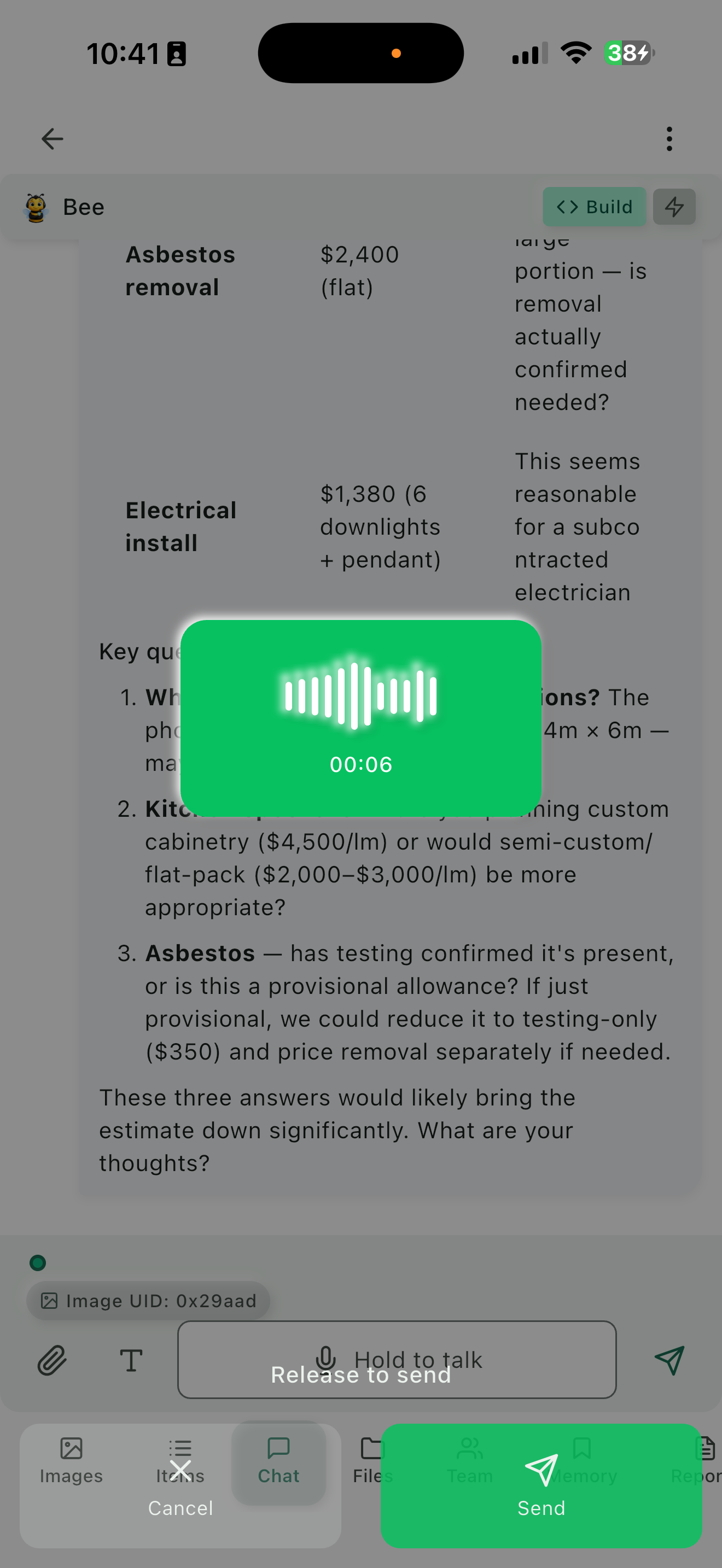
Voice-first operating
Capture scope, ask for changes, adjust lines, and approve work while your hands are busy.
Meetings become pricing context
Capture client conversations and voice notes. Inoscope keeps the meeting record connected to the pricing record.
Review from anywhere
Remote access keeps approvals moving across site visits, offices, vehicles, and fragmented workdays.
Price variations in the field
Scope change mid-job? Capture it on your phone and price the variation while the context is fresh.
Photos, files, conversations, variations, reviews, and approvals — from one device.
Choose the pricing workflow that matches how your team works.
Inoscope is for construction teams that already have job context, rates and expert reviewers, but need faster, more consistent scope-to-price decisions across repairs, renovations, tenders and branches.
Builders and renovation teams
Pain
Too many quotes wait on senior people, job information is scattered, and margins leak when variations, maintenance work and invoices are not linked back to the original quote.
How Inoscope helps
Price more jobs without adding more estimators. Turn photos, plans, notes and invoices into scoped, priced work records your team can review, adjust and approve.
Insurance repair and reinstatement operators
Pain
Damage evidence, repair scope, SORs, approvals, reinstatement decisions and invoices sit in different places, making repair prices harder to defend.
How Inoscope helps
Keep damage evidence, repair method, SOR logic, reviewer decisions, variations and invoice feedback together in one repair pricing record.
Branch and franchise networks
Pain
Branch leakage happens when every team prices from a different version of the truth and head office cannot see exceptions.
How Inoscope helps
Shared pricing logic, local review and head office visibility over exceptions, rate drift and approved pricing history.
QS and tender teams
Pain
Tender packs are long, assumptions get lost, and pricing review often happens too late.
How Inoscope helps
Turn tender packs into structured pricing records with assumptions visible before expert QS review.
Rate calibration and pricing governance teams
Pain
Back-costing happens late, so rates drift from real job outcomes and leakage becomes hard to see.
How Inoscope helps
Feed invoices, completed-job costs and reviewer decisions back into account-specific rate calibration.
Reviewers and ecosystem users
Pain
Claims, tenders and branch pricing are hard to review when evidence, scope, variations and final invoices are fragmented.
How Inoscope helps
Give QS reviewers, claims reviewers, insurers and assessors better visibility into pricing logic without removing builder review.
What changes when pricing becomes an approval workflow.
These examples show concrete workflow proof: the same job context, rates, assumptions and reviewer decisions stay together from intake to approval.
Scattered repair information
Before Inoscope
Photos in phone, notes in email, rates in spreadsheet, approval in another thread.
After Inoscope
Photos, line items, rates, assumptions, reviewer comments and approval in one pricing record.
Kitchen fire reinstatement
Before Inoscope
Damage photos, repair scope, quantities, rates and invoice feedback handled as separate admin steps.
After Inoscope
Damage photos -> repair scope -> measured quantities -> priced line items -> reviewer approval -> invoice feedback into rate book.
Franchise network
Before Inoscope
Branch teams price similar work with local spreadsheets and head office sees exceptions late.
After Inoscope
Branch teams submit assessments using shared rate rules. Head office reviews exceptions and keeps approved pricing history across locations.
Learn the workflow before work reaches your desk.
The Inoscope User Guide gives teams a searchable place to understand assessments, exports, records, billing, and day-to-day review steps.
wiki.inoscope.com
Inoscope User Guide
Assessment workflows
Step through damage, general, and tender assessments with the same language your team sees in the app.
Feature reference
Find guidance for files, records, exports, line items, account settings, and team collaboration.
Troubleshooting
Use the FAQ and best-practice notes when users need quick answers without waiting on support.
Pricing plans for scope-to-price capacity.
Choose Starter for proof of workflow, Professional for regular operating use, Scale for multi-team or higher-volume pricing, and Enterprise when rollout or approval controls need sales-led design. Prices are shown in USD.
Starter and Professional include a free trial. Prices are shown in USD. NZD/AUD equivalent depends on exchange rate and bank conversion.
Starter
Entry scope-to-price workflow
For small repair, maintenance and renovation teams proving the workflow on damage and general work assessments.
Free trial on this tier
Free trial, then monthly billing in USD
- Free trial included
- Pooled usage with no tender assessments included
- Around 20 damage or general assessments* per month
- Full recording function for photos, notes and site context
- Unlimited invited users for collaboration, subject to fair use and shared processing limits
- Account-specific rate calibration included
- Report and quote export
- Email and phone support
Professional
Serious operating tier for pricing teams
For builders, repair teams and QS teams running regular approvals from plans, drawings, tender documents and complex job context.
Free trial on this tier
Free trial, then monthly billing in USD
- Free trial included
- Everything in Starter
- Dedicated processing resource
- Tender assessment function
- Supports drawings, plans and specifications
- Pooled usage: 25 tender assessments* or around 100 damage or general assessments* per month
- Customizable exports
- Approval workflow configuration
- Priority support
Scale
Higher-capacity pricing infrastructure
For scaled operators, franchise or branch networks, and higher-volume repair, reinstatement and tender pricing workflows.
Monthly billing in USD
- Everything in Professional
- Dedicated processing resource with higher capacity
- Higher-accuracy model for complex tenders and deeper project understanding
- Pooled usage: 80 tender assessments* or around 300 damage or general assessments* per month
- Dedicated support and account manager
- Operational fit review for multi-team rollout
Enterprise
Sales-led workflow and rollout support
For organisations needing custom approval controls, onboarding, data controls and supported rollout across teams.
Custom annual or monthly terms
- Custom workflow design
- Tender assessment for enterprise workflows
- Damage, general work and repair workflows
- Export and integration scoping where required
- System embedment into your operating environment
- Enterprise support, data controls and rollout planning
Stop estimating.
Start approving.
15 minutes with our team. See how Inoscope turns raw job context into a scoped, priced assessment ready for approval.
Straight answers for builders, repair teams and pricing teams.
These answers are deliberately explicit so buyers and AI answer engines can understand what Inoscope is, who should use it, what it accepts and what it produces.
What is Inoscope?
Inoscope is construction pricing infrastructure: an AI-assisted scope-to-price workflow for builders, repair teams and QS teams. It turns photos, plans, invoices, voice notes, SORs, scope files and tender documents into scoped, priced, approval-ready work records.
Who is Inoscope for?
Inoscope is built for medium-sized builders, insurance repair builders, reinstatement contractors, restoration teams, renovation and maintenance teams, franchise or branch networks, and QS or tender teams that need pricing consistency and reviewer control.
Is Inoscope AI construction estimating software?
Inoscope overlaps with AI construction estimating software, builder quoting software and tender pricing tools, but it is not another manual estimating screen. It turns job context into a structured pricing record with evidence, rates, assumptions, reviewer notes, approval status and rate calibration feedback.
What problem does Inoscope solve?
Inoscope helps teams reduce estimator bottlenecks, pricing admin, branch inconsistency, delayed approvals, missing proof trails, quote leakage and late back-costing feedback. It adds pricing capacity without removing expert review.
Does Inoscope replace estimators?
No. Inoscope creates the pricing record so estimators, project managers, branch leads, QS teams, and reviewers can check the logic, adjust where needed, and approve the final price.
Can Inoscope use our own rates?
Yes. Inoscope uses your rates, margins, markups, supplier invoices, past quotes, completed-job costs, and approved pricing history to calibrate pricing to your business.
What outputs does Inoscope generate?
Outputs include structured scopes, quantities, measured assumptions, line items, rate logic, evidence trails, reviewer notes, approval status, quote or report exports, variation records and rate calibration evidence.
Does Inoscope work for insurance repair and reinstatement?
Yes. For insurance repair, Inoscope turns claim evidence, damage photos, reports, SORs, invoices and site notes into scoped, priced, approval-ready repair records with evidence, assumptions, reviewer notes, variations and rate calibration attached.
Can Inoscope read plans and photos?
Yes. Inoscope can work from photos, plans, drawings, invoices, reports, voice notes, emails, SOR schedules, scope files and tender packs. Output quality depends on the completeness and complexity of the supplied information.
How is Inoscope different from estimating software?
Traditional takeoff and estimating tools usually stop at the quote. Inoscope prepares the scoped and priced record from job context, connects evidence to scope and price, and follows the price through approval, variation, invoice and rate feedback.
How does Inoscope help reduce quote leakage?
Inoscope helps reduce quote leakage by keeping evidence, scope, rates, assumptions, approvals, variations, invoices and rate feedback connected in one pricing record. Teams can see where pricing changed, why cost moved and what should improve next time.
What is claims leakage?
Claims leakage happens when repair costs increase or become difficult to justify because evidence, repair scope, SOR/rate logic, approvals, variations and invoices are disconnected.
What is margin leakage?
Margin leakage happens when the approved price and the real delivery cost drift apart because scope, rates, assumptions, variations, invoices or back-costing feedback were not connected.
What is rate calibration?
Rate calibration is the feedback loop that compares approved prices with invoices, variations, completed-job costs and reviewer decisions. Inoscope keeps that evidence account-specific so future pricing reflects your real work, not a generic market average.
What does Inoscope cost?
Starter is for proving the workflow on smaller repair or renovation assessments. Professional is the serious operating tier for regular builder, repair and tender pricing. Scale is the public $1,299 tier for higher-volume or multi-team operators. Enterprise is sales-led for custom rollout, approval controls and data requirements.
Bring one real job.
Show us one repair, renovation, tender or variation. We'll walk through how Inoscope would turn the photos, plans, notes and invoices into a scoped, priced, approval-ready record.